Radikon — wine that knows how to wait
Oslavia, Gorizia · Italy, on the Slovenian border
 © Radikon
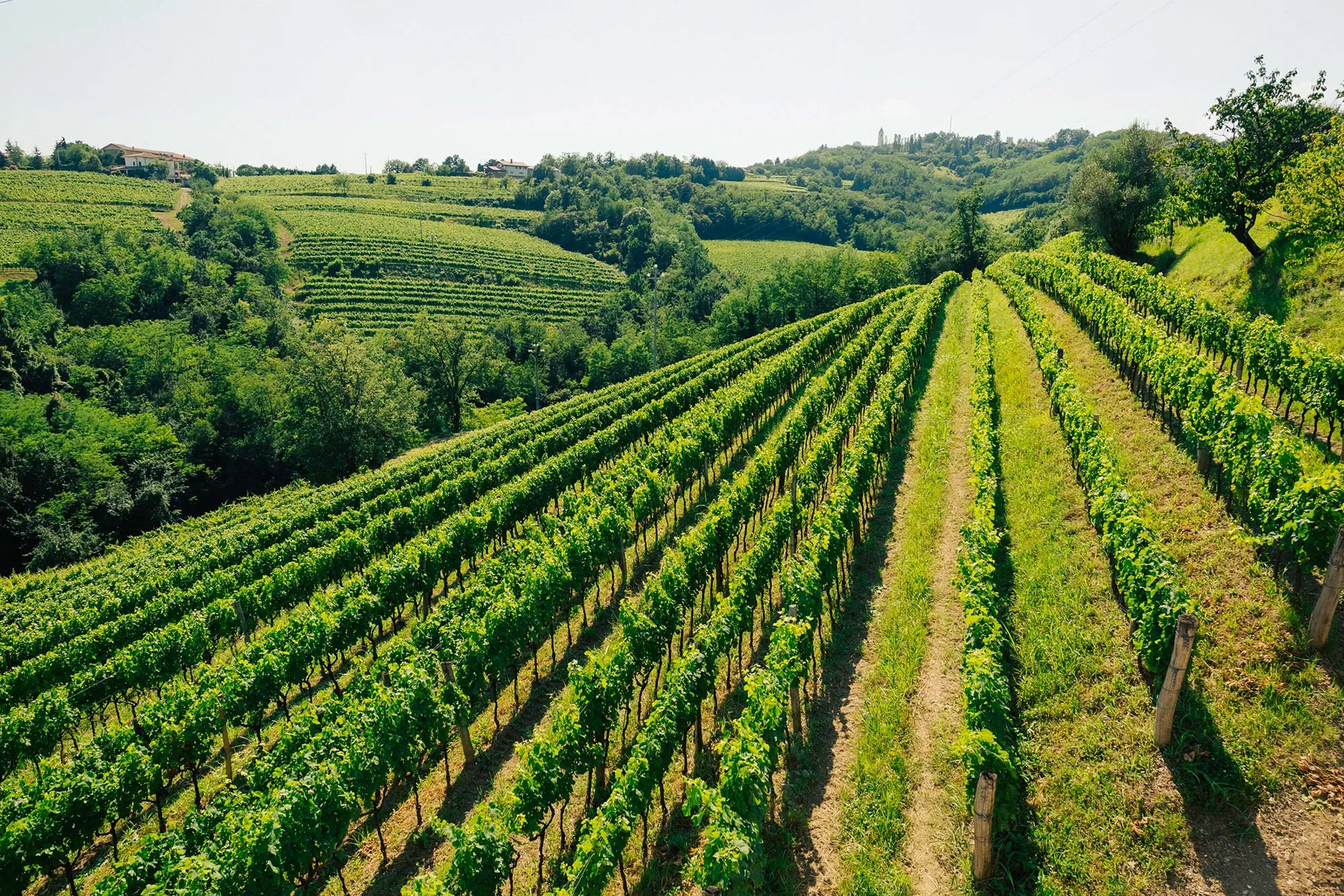
Oslavia, above Gorizia, is one road, a few hills and many vines — right on the Slovenian border. Here the Radikon family went from tenant farmers to winegrowers and, through long skin macerations of white grapes, shaped a style that should not be mistaken for a trend.
- Location
- Oslavia, Gorizia (Collio)
- Soil
- ponca
- First bottling
- 1980, the 1979 vintage
- Lines
- Blue line · S line · POP
 © Radikon
From tenant farmers to winegrowers
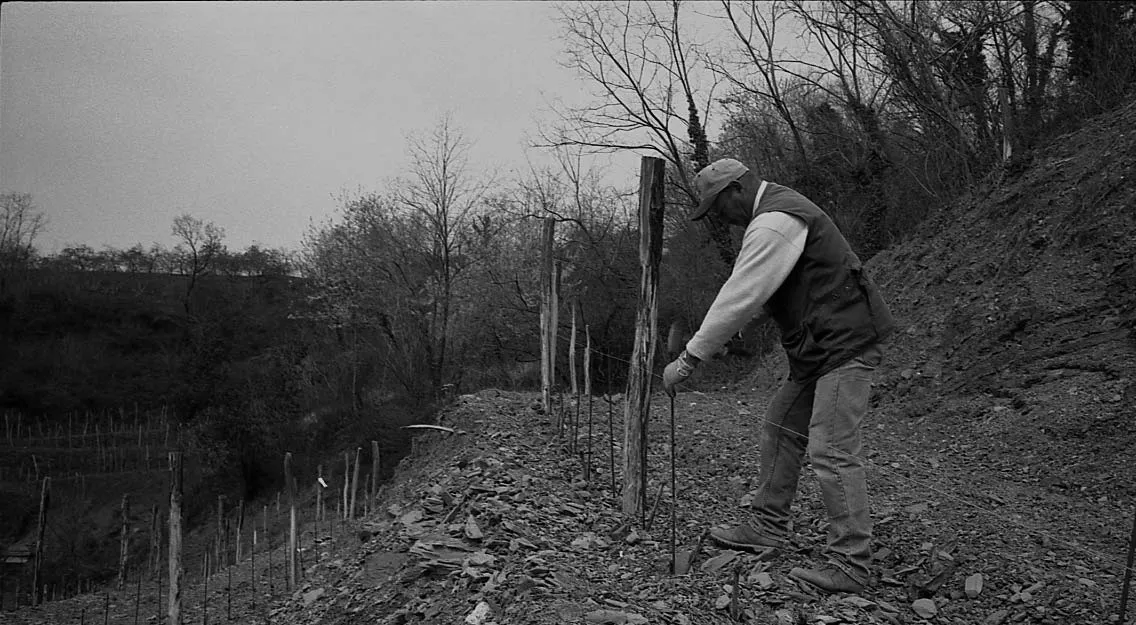
The family history begins with an 1861 deed listing the Radikons as tenant farmers. In 1923 they registered the land as their own, and around 1950 it was still a typical subsistence farm: vegetable garden, animals, fruit and a little wine sold loose.
Oslavia lies on the Italian side, but the landscape and the soil — the ponca of this border strip — are the same as in Brda across the line. Radikon itself names the only components of its wine as the territory, the vineyard, the ponca, hard work and the grapes.
 © Radikon
Stanko and the turn to maceration
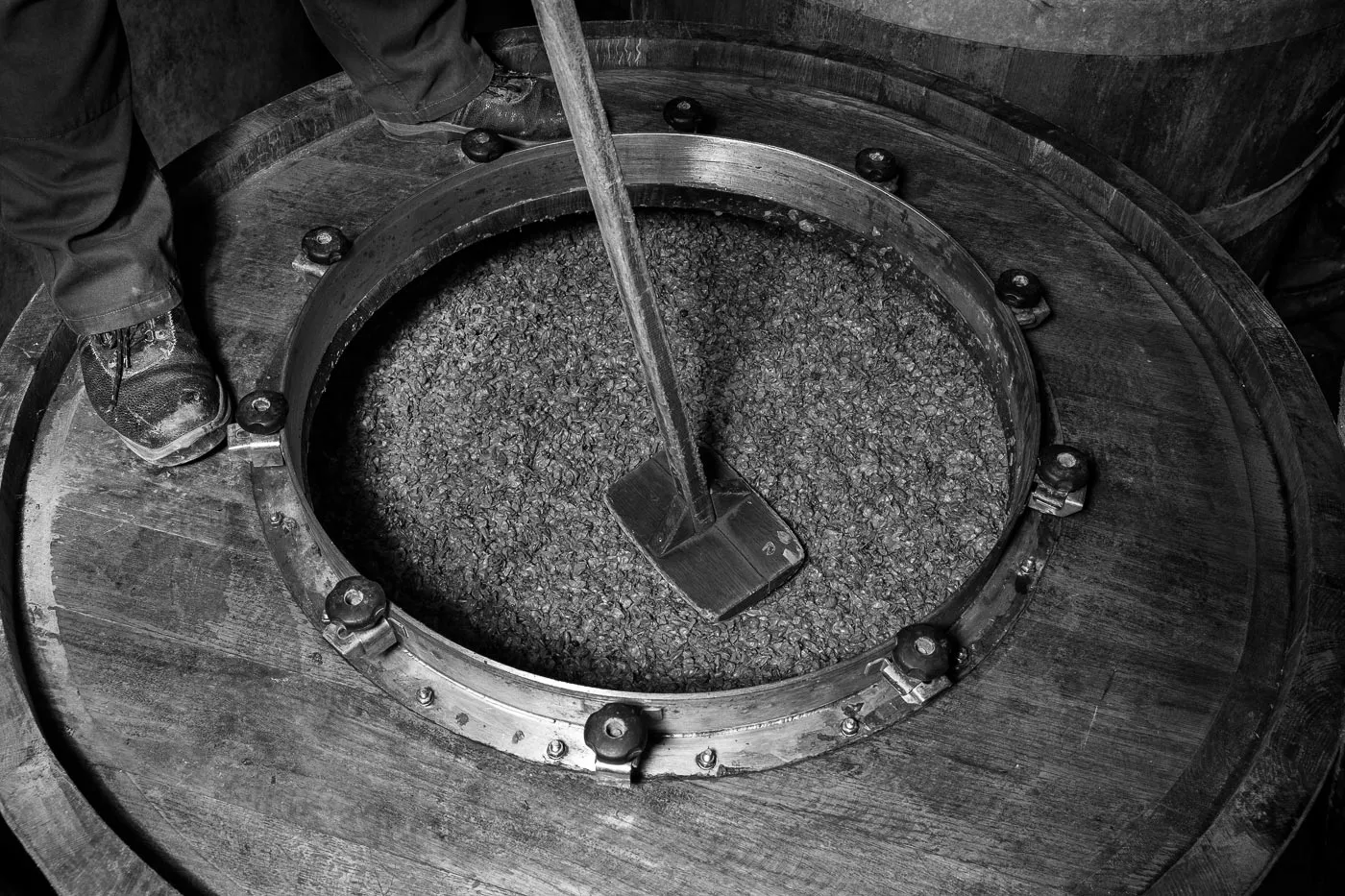
In 1980 Stanko Radikon bottled for the first time — the 1979 vintage: low yields, careful vineyard work, a few stainless-steel tanks. The turning point came in 1995 with macerated Ribolla. In the years that followed, macerations and ageing grew longer while sulphur use fell.
In 2002 came the final decision: the wines macerate for three months and added sulphur is no longer needed. What was needed instead was a better cork and new formats — the litre and half-litre — now the hallmark of the blue line.
 © Radikon
Wait. Wait a little longer.
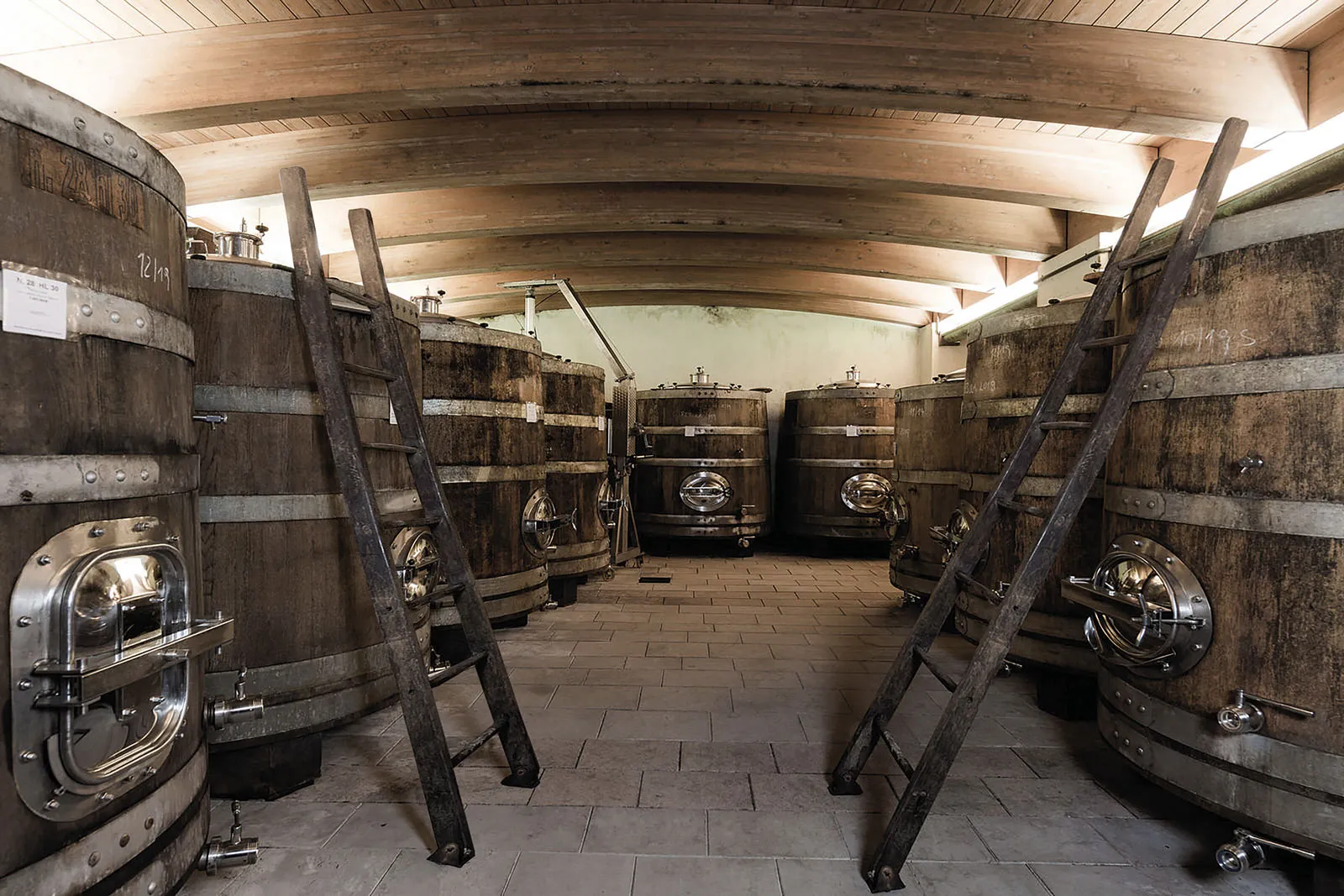
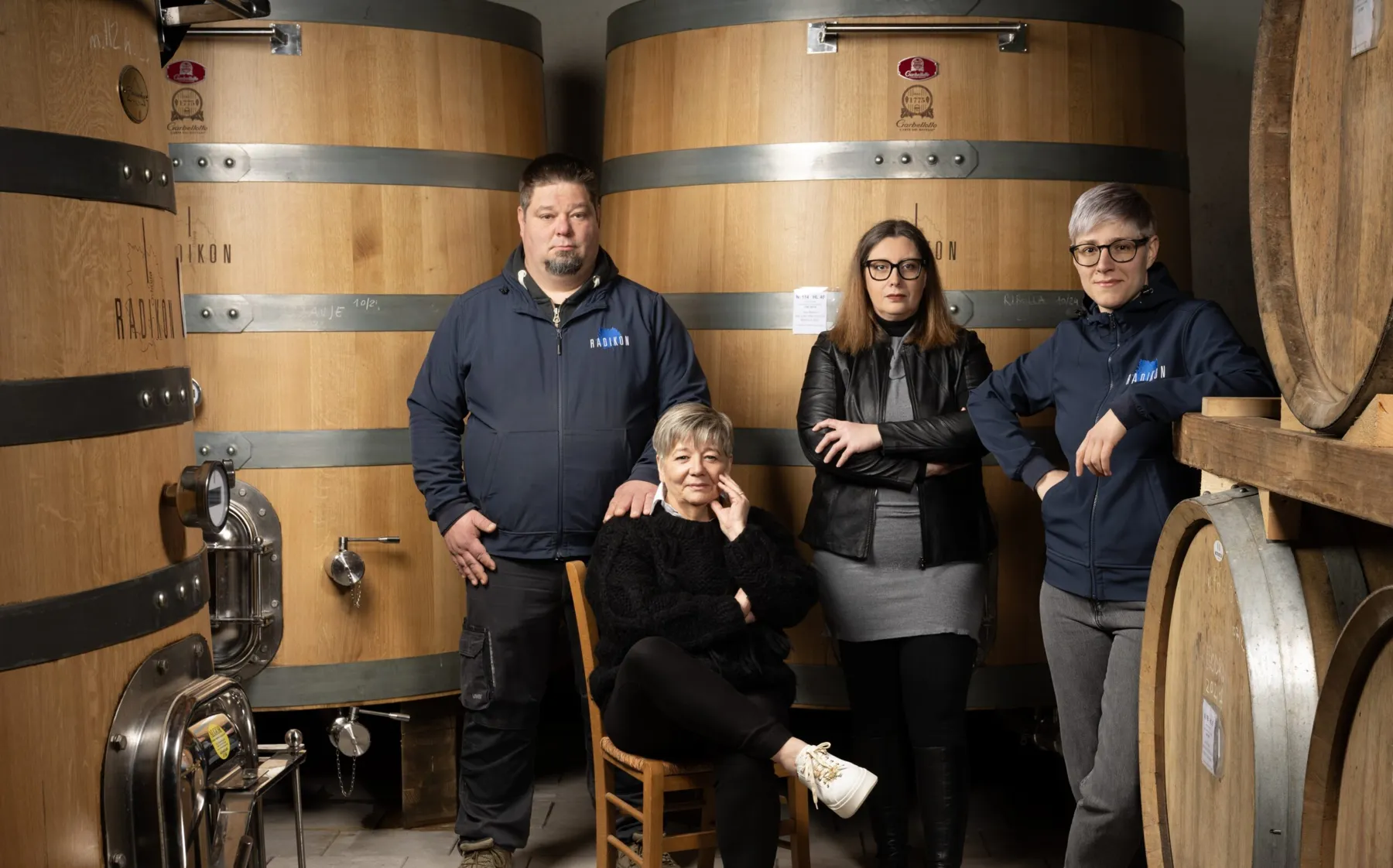
Only a few bunches per vine, picked by hand and only at optimal ripeness. The skin holds the information of the vintage and long maceration draws it out — but balance and stability take years in cask and in bottle. That is the meaning of the word Radikon highlights: aspetta, wait.
 © Radikon
A new generation, new lines
In 2009, with Saša, came Sivi and Slatnik — the S line, with shorter macerations of around ten days and therefore a small addition of sulphur. The red RS was first trialled in 2014 and has been made every year since 2017. Stanko died in 2016, a few days before the harvest.
In 2023, with Ivana, the POP line was born: a white and a red with minimal maceration, easy to drink yet unmistakably Radikon in style.
Selected milestones
- 1980
Stanko's first bottling, the 1979 vintage.
- 1995
The turning point: macerated Ribolla.
- 2002
Three-month macerations without added sulphur; litre and half-litre bottles.
- 2009
With Saša, the S line is born.
- 2023
With Ivana, the POP line is born.
Three lines, three rhythms
- Blue line · Ribolla, Oslavje, Jakot
- On the skins2–3 months
- Ageing3 years in cask, 1–2 years in bottle
- Sulphurnone added (since 2002)
- S line · Slatnik, Sivi, RS
- On the skins8–14 days
- Ageing1 year in cask, at least 4 months in bottle
- Sulphursmall addition
- POP · Bianco, Rosso
- On the skins2–4 days
- Ageing6–10 months in steel, a few months in bottle
- Sulphurnot stated
From Radikon's official site; timings depend on the vintage. The blue-line Merlot and Pignoli macerate for about a month and age much longer. Sources
Selected wines
 © Radikon
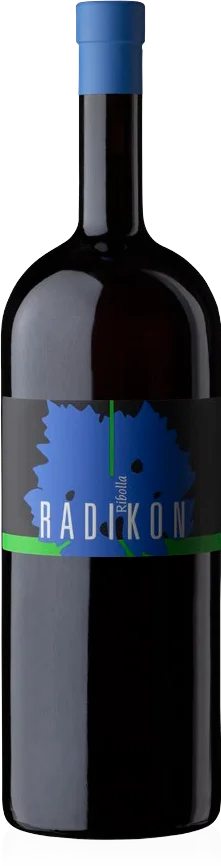
Ribolla
Ribolla Gialla
The wine that began Radikon's turn to maceration in 1995. Blue line.
Wine details
- In the cellar
- 2–3 months on the skins, 3 years in cask, 1–2 years in bottle depending on the vintage.
 © Radikon
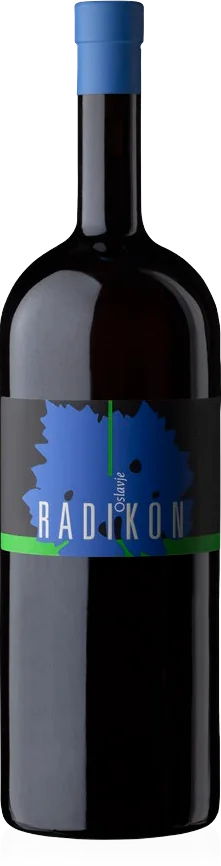
Oslavje
Pinot Grigio · Sauvignon · Chardonnay
A blend first made in 1992. The producer's current wine page lists it as “O…….”.
Wine details
- In the cellar
- 2–3 months on the skins, 3 years in cask, 1–2 years in bottle depending on the vintage.
 © Radikon
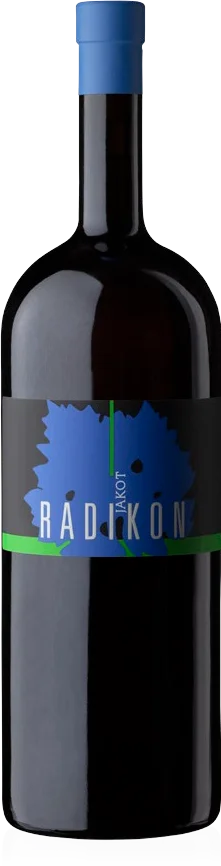
Jakot
A blue-line white, born in 2001 and described by Radikon as going “against the current”.
Wine details
- In the cellar
- 2–3 months on the skins, 3 years in cask, 1–2 years in bottle depending on the vintage.
 © Radikon
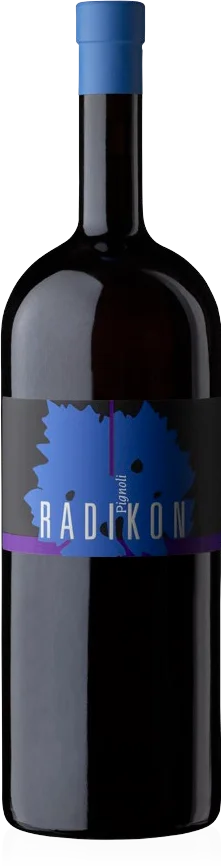
Pignoli
Pignolo
A red from Pignolo; the first vines were planted between 1998 and 2000.
Wine details
- In the cellar
- 1 month on the skins, at least 5 years in used barriques, at least 6 years in bottle.
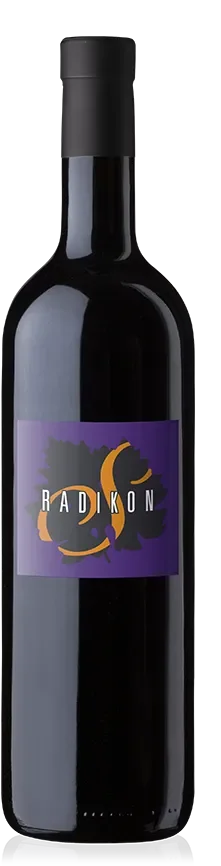
Slatnik
An S-line white with shorter maceration and a small addition of sulphur.
Wine details
- In the cellar
- 8–14 days on the skins, 1 year in cask, at least 4 months in bottle.
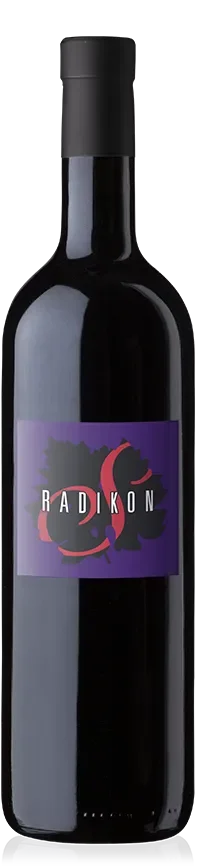
RS
The S-line red: first trialled in 2014, made every year since 2017.
Wine details
- In the cellar
- 8–14 days on the skins, 1 year in cask, at least 4 months in bottle.
 © Radikon
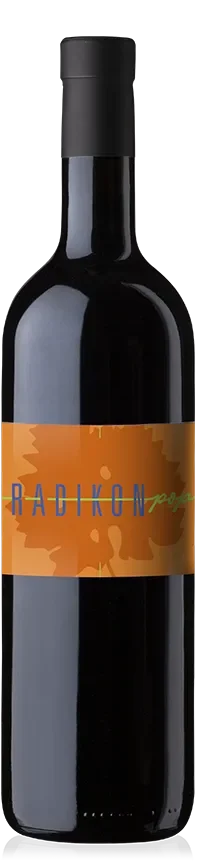
POP Bianco
The POP white, with minimal maceration and very easy to drink.
Wine details
- In the cellar
- 2–4 days on the skins, 6–10 months in stainless steel, a few months in bottle.
 © Radikon
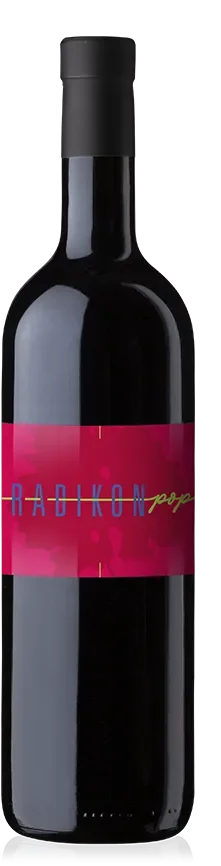
POP Rosso
The POP red, with minimal maceration.
Wine details
- In the cellar
- 2–4 days on the skins, 6–10 months in stainless steel, a few months in bottle.